Monday, April 23, 2018


Bloom's Taxonomy


 Knowledge

  1. What does mean “organism plus environment”?
  2. How is neoliberalism described?
  3. What are the categorical types of literacy?
  4. What is about the cultural literacy?
  5. How is ecopedagogy defined?
Comprehension

  1. What would you do as a prospective teacher to encourage students to conserve the environment?
  2. what is the purpose of the environmental movement?
  3. How do you interpret the phrase “ the progressive educator must always be moving out on his or her own, continually reinventing me and reinventing what it means to be democratic in his or her own specific cultural and historical context”?
  4. How do you associate "sustainable society" in term of "ecological sustainability?
  5. According to Jim Cummins and Dennis Sayers delineate three categorical types of literacy, can you make a contrast between these?

 Application

  1. How do you show the code for understanding the basic ecological unit of survival in your daily life?
  2. Which could be some strategies to solve what human production and consumption cause in flora and fauna?
  3. How did U.N. Stockholm conference change the people’s attitude about the environment issue?
  4. Which were the causes affecting the publication of Earth Charter?
  5. Can you relate the Environmental Education as contested terrain? Why?
Analysis 

  1. How do you explain the meaning of transnational technocapitalism and its purposes?
  2. According to the author, how he connect rapid advances in military science and technology?
  3. How do you explain the fact that implement Environmental Education had not been defined before Stapp defined this discourse?
  4. Compare O'Sullivan's perspective and Gonzalez-Gaudiano’s perspective about Transformative Education. What did you find different?
  5. What can you infer about ecological sustainability?
Summary

  1. According to the reading “Towards Ecopedagogy: Weaving a broad-base, pedagogy of liberation for animals, nature and the oppressed people of the earth, how do you generalize the Ecological Catastrophe in the 21st century?
  2. According to the reading “Towards Ecopedagogy: Weaving a broad-base, pedagogy of liberation for animals, nature and the oppressed people of the earth, describe the role of capitalism in the 21st century.
  3. How do you describe the process from being environmental literacy to being ecoliteracy?
  4. How do you describe the process from an environmental education to an education for sustainable development?
  5. Design a mental map with the main characteristics of the “Zoo School”.

 Evaluation

  1. How do you judge the phrase “living beings and organic habitats are being culled and destroyed in the name of human production and consumption at staggering rates”? Are you agree or disagree? support with examples.
  2. Evaluate the use of an environmental education, what are the positive and negative effects of using an environmental approach in the education field?
  3. Compare and assess the idea of promoting sustainable development and improving environmental issues through education with the context of education in Colombia.
  4. Compare a transformative education with a biocentric approach within the English Education field.
  5. Evaluate the expansion of globalization around the world, what are the advantages and disadvantages?

Sunday, April 22, 2018


Examine a cultural pattern in your country that you think a foreign visitor should be aware of in order to adjust more easily and avoid intercultural conflicts and misunderstandings. Consider such things as values, beliefs, communication styles, and concepts of time.


Resultado de imagen para colombia

According to CNN news channel, the Colombia situation has changed compared to the time where it country was known by drug trafficking or the character of Pablo Escobar. If you want to travel and enjoy this beautiful country, you must put aside the ridiculous stereotypes. Colombia is not Pablo Escobar.

Today Colombia is so much more than that. Colombia should be recognized by the Nobel Peace Prize awarded to writer Gabriel Garcia Marquez. Likewise, my country should be identified by talented athletes such as Mariana Pajon, Nairo Quintana, James Rodriguez, or performers as Juanes and Shakira.

Colombia has the world's best coffee. Besides, this place has a major diversity flora and fauna. Their people are the most cheerful of the whole planet.

In terms of religions, most Colombians are Catholics however, exist the freedom of religious belief. On the other hand, we Colombians are emotional or social. We shake hands or even kiss our cheeks to greet us. For our is important to make eye contact when we talk, something different and considered rude in other countries.

Sunday, April 15, 2018

Whose viewpoint is expressed?

This article is expressed by Psychologists and published in the Washington Post by Lisa Fazio.

What does the author want us to think?

The author wants to create awareness in the society about the information we receive. She wishes that we can detect errors in what we read and listen, for us to take part in different aspects, political, economic, scientific and cultural without making mistakes for misinformation.

What viewpoint is not expressed? Whose voice do we not hear?


I consider that participants' voice should be heard to know their views about these kinds of mistakes when they answer questions.

What is an alternative perspective of the text?

The most relevant alternative is a careful reading to catch errors and misinformation in resources like tv, newspaper, and website. Besides, Professional fact-checkers have an essential role to correct false information before being used in the world.

Can you think of other questions this text responds to?

I believe that this article responds the next question.
why students get bad grades in class?

Sunday, April 1, 2018


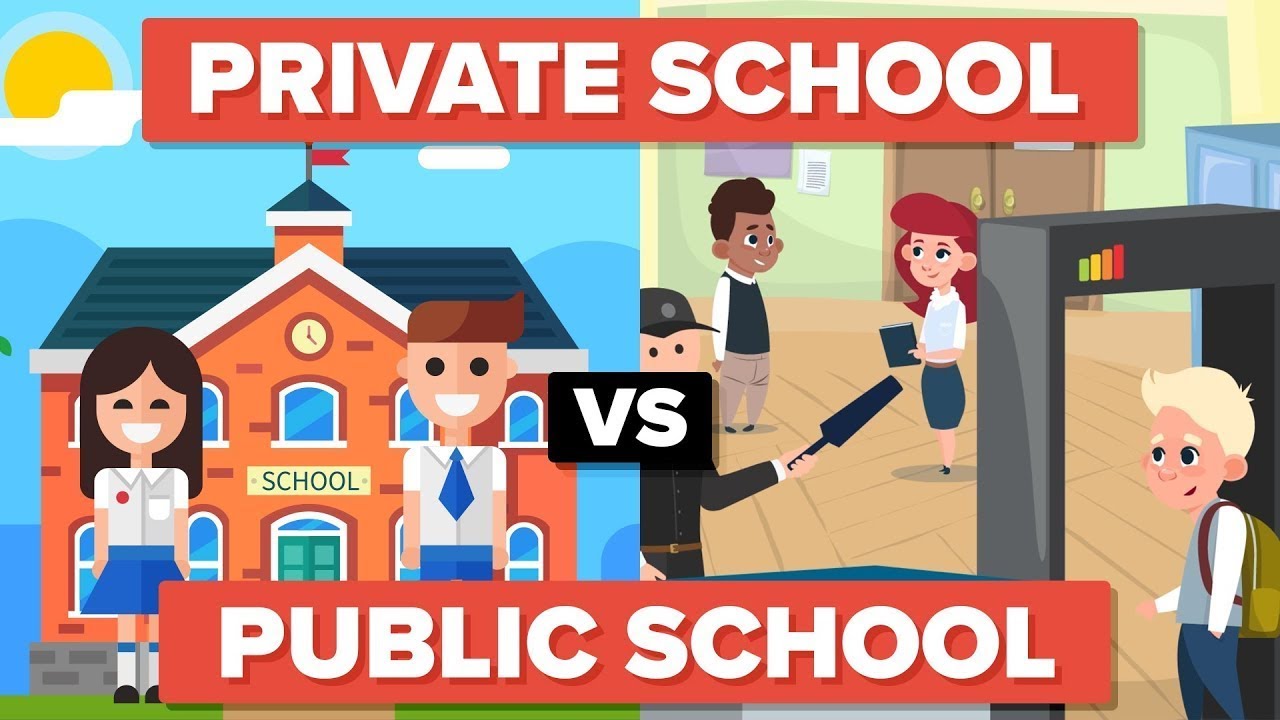
What are the differences of English teaching in public and private schools?

Resultado de imagen para private school vs public school

The knowledge of English is important for the intellectual development of the student and more when this language is completely changing the world. But, the teaching of this area is not appreciated in the same way at the public as private schools. In public education, teachers do not have adequate technological resources, class hours are not enough or even worse teachers are not qualified to teach English.

First, I was a student of a public school and from my experience, English class was absolutely boring, my teacher had knowledge but I was not motivated to learn English, the class it was always developed in the same way, we used the dictionary and notebook. My school did not have enough technological resources to students could work and for this reason, the teacher was limited to implement another type of activity. It is totally different from private schools where teachers have the advantage of using technologies to provide more didactic learning.

Second, Public schools are not spending the same number of hours for English subject, as do with subjects like maths, Spanish, and science because these schools not considered English significant. As an example, I am doing a practice in a public school with fifth-grade students where they see only one hour of class per week. Time is not enough to explain the different topics and encourage to develop the abilities that children need.

Last but not least, teachers have to fulfill a schedule and for this, they sometimes have to complete teaching subjects for which they are not qualified. In other words, a math teacher will teach English, if he does not have full academic positions. Making the education provided to students is not of the same quality as if taught by an English teacher.

In conclusion, is clear the differences between English teaching in public and private schools, where teachers have more opportunities to implement new strategies to teach English as regard as resources.

Friday, March 16, 2018


ESSAY OUTLINE


What are the differences of English teaching in public and private schools?


THESIS STATEMENT: Education in public schools is not the same quality than private schools.


PARAGRAPH 1: Public schools do not have enough resources to the teaching.


PARAGRAPH 2: The number of hours to teach English in public schools is not enough.


PARAGRAPH 3:
The public schools need to have qualified teachers to teach each subject.


CONCLUSION: The process of teaching English is better in private schools due to different factors such as adequate technological resources, enough class hours, and teachers are qualified to teach a specific the subject

Monday, March 5, 2018

At the end of "Critical Theory and Educational Practice", Giroux states that "The point is that critical theory needs to be reformulated to provide the opportunity to both critique and elaborate its insights beyond the constraints and historical conditions under which they were first generated" (p. 50).


In your blog, answer this question: How do you think Frankfurt School thoughts can be applied to today in our own culture?
In our culture, these thoughts can be implemented from the beginning of learning an education based on critical and creative thinking, where teachers to encourage students to take part in topics of interest that allow them to develop an investigative and innovative habit.
In the same way, generating spaces for the exchange of knowledge that help the feedback, and likewise that the students gain confidence when expressing their points of view.


Thursday, March 1, 2018


1.How does Michael Sandel support the thesis that "over the past three decades we have drifted from having a market economy to becoming a market society?"

Michael explains that market economy is an instrument uses for organizing productive activity and it brings prosperity to countries around the world. On the other hand, the market society is a place where almost everything is up for sale.

With this thesis, he wants that we the society revise and change the wrong idea that everything has a price, promoting the development of values and human relationships.


2. What sorts of arguments are offered for and against the assumed proposal of paying young children two dollars for every book they read?

There are opinions divided, some participants think that paying children for each book read will motivate them to get a habit of reading, and others say that incentive of pay kids will create an addiction for the money, where they will expect to receive cash for everything, losing the main purpose of that enjoying learning through books.

For instance, those are different points of views.

offered:
  • You can start them off with paying two dollars and this probably uses the money for buy books.
  • One person said that it is a good jump start to help them grow in the love of learning.
Against:

It is a wrong performance because using the wrong incentive they are implementing the wrong behavior and they'd figure out a way to read stupid books or things that wouldn't really get it what we're trying to change. Also, other participant said that the developing passions and love for things and you cannot buy those things they're priceless.


3. Now, what is your standpoint about cash incentives at school or at home to encourage students to read more books?

In the digital age, one the most difficult challenge today is teaching the love for books. But I definitely think that giving money rewards not is a good idea to encourage them, children, to read. They need read for pleasure and not expecting to get something in return.


4.When Michael Sandel contends that "this tendency of markets and cash incentives of crowding out nonmarket goods, higher goods, can be seen in may spheres of social life, what sort of "higher goods" do you think he is referring to?


I think he refers higher goods as values, honesty, friendship, health, love, happiness. Although the Money has become a necessary element in our lives. I consider that is important to rearrange our priorities taking into account our real values, beliefs, and principles because it is clear that there are things that money can not buy.

5.What kind of nonmaterial goods do you think have been crowded out by market transactions in Colombia?

In my country, the non-material goods that change by market transactions are education, right to choose, health and justice, due the honesty and integrity of people are alteration when offered them some benefit in return.


6.What should be the role of money and markets in our Colombian society?

The main role should be to invest in education, health, and public spaces that improve quality of life civic. Additional, raise awareness for the high quality of products made in Colombia to this generate income that help the sustainable development.

Sunday, February 25, 2018

Stephen Brookfield on Critical and creative thinking


The video began with a brief introduction about Stephen Brookfield and the purpose of his presentation. In this case, the main topic was how to facilitate the critically and creatively thinking in the classroom in order to move students beyond their familiar framework.

Stephen Brookfield expressed his definitions about critical thinking and creative thinking.
The first is a process by which we become aware of the assumptions that frame the way we think about life decisions, we act and judgments.

Second, creative thinking allows you to view ideas from multiple viewpoints. It is used to moving outside the usual framework. In other words, who get this thinking is able to generate interpretations and responses that are different from average.

To communicate the idea of critical thinking, he used the word assumptions, there are three important types of assumptions: the causal that describes a sequence of historical events, the prescriptive about how things should happen, and paradigm common sense taken for granted.

Furthermore, he made allusion to the four key intellectual traditions useful to construct arguments and reinventing new ways of thinking.
Last but not least, he showed tools to improve the students' abilities in critical and creative thinking like workgroups of discussion and exercises with questions that facilitate participation.

Sunday, February 18, 2018

WHICH BARRIERS HAVE AN EFFECT UPON YOU?


There are two relevant barriers that affect my critical thinking abilities.

The first is the reluctance to criticise those with more expertise because It can be considered as a lack of respect for the experts which makes us feel insecure about our way of thinking in relation with the topic.


Secondly, Insufficient focus and attention to detail that can result from my lack of experience to identify the real problem and give a constructive criticism.

REFLECTION

I recognize some of Bodner's description in myself, because it is easier to solve a problem related to my area of knowledge but also, I aware that it is a bit complex for me try to export that knowledge to other areas, such as mathematics.

This approach suggests me that I am not only should one go deeper into a single area, but prepare to solve problems that arise in daily life in different fields of knowledge.


Resultado de imagen para mujer pensando

INFLUENCES ON MY THINKING

I need to be most aware making mistakes is part of the process of learning. All people have the opportunity to share their opinion not matter if they are wrong or not. I consider that it is feeling prejudice my way of thinking.


CHALLENGING OPINIONS


 In my case is hard to have confidence in myself to evaluate the worth the opinion of someone and express that her/his is wrong; because the other person can take it as a negative criticism and not as an argument that can help it improve. Moreover, as a result of this, an uncomfortable moment may arise.

Tuesday, February 13, 2018

EMOTIONAL SELF-MANAGEMENT

Nowadays, when you talk to someone about a topic, you can find different points of view and try to convince that our point is the correct can be difficult.For this reason is necessary to give good arguments that help to support our opinion. However, there are people unable to understand that they are wrong, they are stubborn.In moments like this for me is not easy to manage my emotions because I feel stress and anger.

Imagen relacionada